Remote Sales Team Management: 2026 Best Practices and Tools

Suresh Madhuvarsu
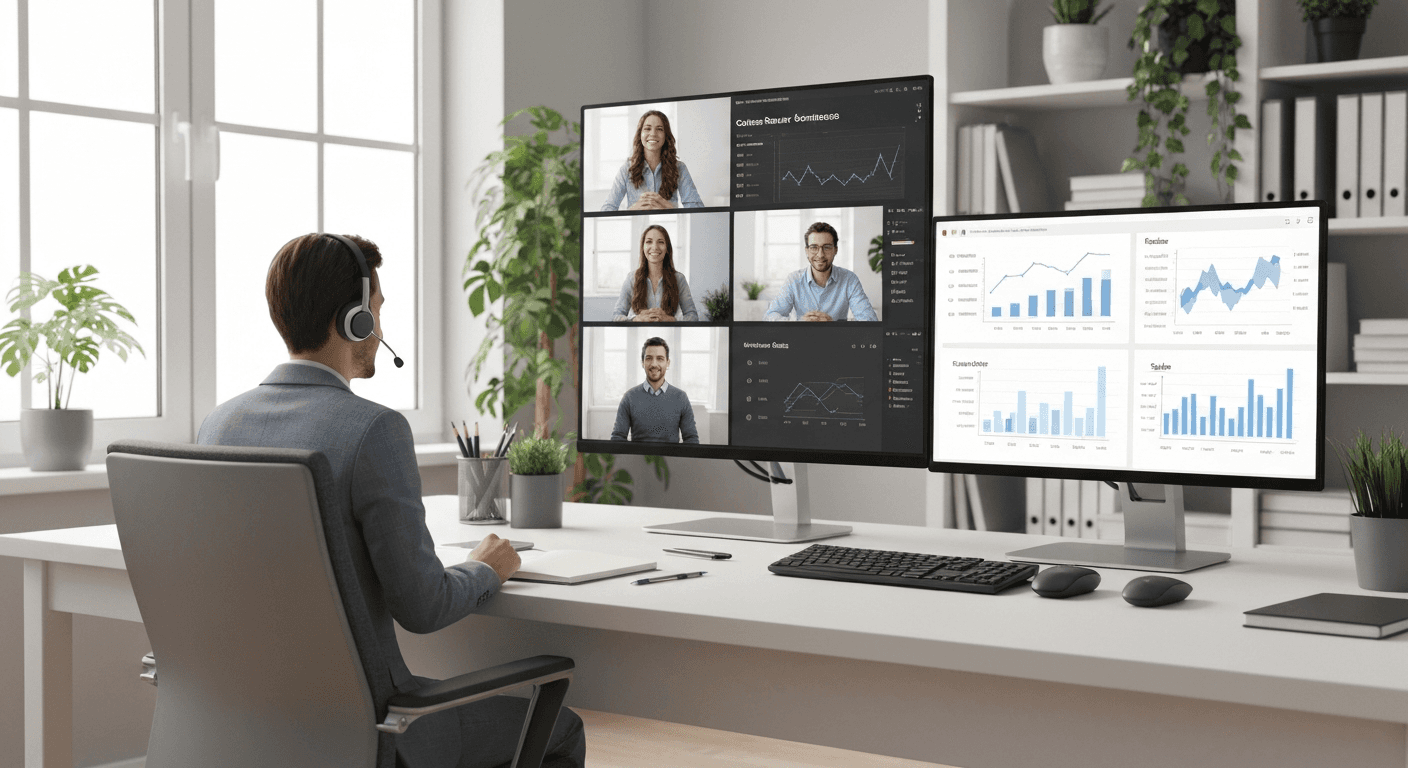
The Real Challenge of Customer Service Work From Home
Managing a remote sales or customer service team in 2026 looks nothing like it did three or four years ago. Most companies have sorted out the logistics by now. Video calls, shared drives, async communication — that infrastructure works.
What still breaks? Sales readiness in the moment. When a rep working from home hits a tough objection, gets a pricing question they can't answer, or needs to know how your product stacks up against a competitor, there's no manager two desks away. No one to tap on the shoulder.
That gap — between what a rep knows and what a customer needs answered right now — is where deals are lost. For customer service roles that carry revenue responsibility, it's also where satisfaction scores quietly erode.
This article covers the best practices and tools that actually close that gap in 2026. Not management theory — execution-level specifics your team can act on.
Why Standard Management Playbooks Break Down Remotely
Most sales management advice was written for offices. Weekly pipeline reviews, side-by-side call shadowing, whiteboard sessions before a big pitch — all of it assumes physical proximity. Remote and hybrid teams don't have that.
The result is a performance split that shows up in nearly every distributed team. Top performers stay sharp because they're self-sufficient. Mid-tier reps drift because they're missing the informal coaching that used to happen organically. New hires take far longer to ramp because no one is physically there to catch small mistakes before they become habits.
Customer service reps working from home face the same dynamic. Without a team lead nearby, they default to what they already know — which may be outdated, inconsistent, or simply wrong for the situation.
More Zoom calls won't fix this. The answer is building systems that deliver the right knowledge and guidance to every rep, wherever they are, at the exact moment they need it.
8 Best Practices for Managing Remote Sales and Customer Service Teams in 2026
1. Set clear expectations before the first call
Remote reps can't read the room. They can't pick up on what "good" looks like by watching colleagues work. That means your standards need to be explicit, documented, and easy to find from day one.
Define what a strong call looks like. Document how objections should be handled. Specify what product knowledge every rep must have before they're customer-facing. When expectations are written down and accessible, reps stop guessing and start executing.
2. Build a consistent onboarding experience regardless of location
Inconsistent onboarding is one of the most expensive problems in remote sales management. One rep gets thorough training. Another joins during a busy quarter and gets a 30-minute Zoom and a folder of PDFs. Six months later, you're left wondering why performance varies so widely.
AI (artificial intelligence)-guided onboarding — which walks new hires through structured training paths covering product knowledge, process, and positioning — solves this directly. Every rep gets the same foundation, whether they're in New York or Nairobi. SalesTable's AI-guided onboarding is built specifically for this, helping new reps ramp faster with consistent, structured training rather than whatever a busy manager has time to deliver.
For more on building a scalable sales process, the article on mastering the art of selling SaaS (Software as a Service) products covers foundational principles that apply equally to remote and in-person teams.
3. Replace ad-hoc coaching with structured real-time support
Coaching a remote team reactively — after a deal is lost, after a bad call — is too late. By the time you review the recording and schedule a debrief, the rep has already repeated the same mistake on three more calls.
Real-time coaching support, delivered during the call rather than after it, changes the outcome. It gives reps guidance when they can actually use it. That's the difference between fixing performance and preventing poor performance in the first place.
4. Use AI to close the knowledge gap
AI has moved well past novelty for sales teams. In 2026, the most practical application is giving every rep instant access to the knowledge they need to answer questions confidently — pricing, product details, competitive positioning, objection responses.
Kai, SalesTable's AI sales assistant, does exactly this. It's trained exclusively on your company's approved knowledge, so reps get accurate, traceable answers rather than generic responses or, worse, hallucinated information. For customer service reps working from home, that's the difference between a confident, accurate answer and a fumbled "let me check and get back to you."
The article on why every sales team needs an AI sales assistant breaks down the specific use cases where AI assistance has the highest impact on remote team performance.
5. Make performance visible without micromanaging
Remote managers tend to overcorrect in one of two directions. They either check in too frequently — creating friction and signaling distrust — or they step back entirely and only notice problems when pipeline numbers start slipping.
Sales leaderboards that surface rep activity and execution metrics give you a middle path. You can see who's progressing, who's stalling, and where coaching attention is needed — without hovering over anyone. SalesTable's leaderboard feature surfaces performance signals before they become revenue problems.
6. Create a culture of shared wins
Remote teams lose the informal knowledge-sharing that happens naturally in an office. The rep who figured out a great response to a competitor comparison never gets to share it with the team. The customer service agent who handled a difficult escalation brilliantly does it in isolation.
Build deliberate channels for sharing wins, objection-handling breakthroughs, and execution insights. When your best performers' knowledge spreads across the team, average performance rises. SalesTable's team collaboration tools make it easy for reps to share what's working so everyone benefits — not just the people who happened to be in the right conversation.
7. Equip reps to handle objections without a manager in the room
Objection handling is where remote reps struggle most visibly. In an office, a manager can step in. On a remote call, the rep is on their own.
The answer isn't just training reps on objections during onboarding and hoping it sticks. It's giving them AI-guided responses during the call itself — when it actually matters. When a prospect pushes back on price, timeline, or a competitor comparison, Kai surfaces the right response instantly. Reps don't freeze. They don't lose the deal to an answer they didn't have.
The MetaGrowth case study shows what this looks like at scale — a high-volume sales team moving from inconsistent execution to consistent performance across a distributed team.
8. Keep compliance front and center
For teams in regulated industries — financial services, healthcare, insurance — remote work creates real compliance risk. Reps working from home may not have the same guardrails they'd have in an office. They may rely on unofficial sources, personal notes, or materials that are simply out of date.
Compliance-safe AI, trained exclusively on approved content and fully traceable, removes that risk. Every answer Kai gives is grounded in your approved knowledge base — no hallucinations, no improvisation, no liability. This matters especially for customer service reps handling sensitive information or regulated products.
The Tools That Actually Help Remote Teams Execute
Not every tool marketed to remote sales teams actually improves execution. Here's a practical framework for evaluating what you actually need:
Need | What to Look For |
|---|---|
Consistent onboarding | AI-guided training paths with progress tracking |
Real-time call support | In-call AI coaching, not just post-call analysis |
Knowledge access | AI assistant trained on your specific content |
Performance visibility | Leaderboards and activity dashboards |
Compliance | Traceable AI with zero hallucinations |
Team knowledge-sharing | Collaboration tools built into the workflow |
The article on 7 proven ways AI helps midmarket sales teams stay competitive covers how teams at scale are putting these tools to work in practice.
SalesTable brings all of these capabilities into a single sales execution platform — which matters because the more tools you stack, the more time reps spend managing tools instead of selling. Explore the full platform at salestable.ai.
What Good Looks Like: A Remote Team Scenario
Picture a customer service rep working from home for a B2B SaaS company. It's 2 PM on a Tuesday. A prospect calls in, asks about pricing, then pushes back: "Your competitor is offering the same thing for 20% less."
Without the right support, that rep hesitates. They don't have the competitive positioning memorized. They don't want to say the wrong thing. They offer to call back.
Deal momentum dies.
Now picture the same rep with Kai surfacing a response in real time — accurate, on-brand, trained on your approved competitive positioning. The rep answers confidently. The conversation continues. The deal moves forward.
That's not a hypothetical future. That's what sales readiness in the moment looks like for remote teams in 2026. The EdTech sales readiness case study shows a similar dynamic playing out in a distributed team context, with measurable results.
FAQs
What is the biggest challenge of managing a customer service team working from home?
The biggest challenge is maintaining consistent performance when reps can't access informal support — a manager nearby, a colleague to ask a quick question. Without structured systems for knowledge access and real-time guidance, performance varies widely between self-sufficient reps and those who need more support.
How do you onboard remote customer service reps effectively?
Effective remote onboarding requires structured, AI-guided training paths that every rep completes the same way, regardless of when they join or where they're located. This removes the dependency on manager availability and ensures every rep starts with the same product knowledge and process understanding.
What tools do remote sales teams need in 2026?
The most important tools are AI-guided onboarding, real-time call coaching, an AI knowledge assistant trained on your company's content, performance leaderboards, and team collaboration features. The goal is giving every rep the same support your best in-office performer would have.
How do you handle compliance for remote customer service reps?
Use AI tools trained exclusively on your approved content and fully traceable. This ensures reps give accurate, compliant answers rather than improvising or pulling from unofficial sources — especially important in regulated industries like financial services or healthcare.
How do you coach remote sales reps without micromanaging?
Use performance dashboards and leaderboards to spot who needs support before it shows up in pipeline numbers. Pair that with real-time AI coaching during calls so reps get guidance when they need it, not just in scheduled review sessions.
How do you keep remote teams aligned on messaging and positioning?
Build a shared knowledge base every rep can access instantly, and use AI to surface the right messaging during calls. Team collaboration tools that let reps share objection-handling wins and execution insights also help spread best practices across the team organically.
What's the difference between a sales enablement platform and a sales execution platform?
Sales enablement (SE) typically focuses on content, training, and readiness before the call. A sales execution platform goes further — providing real-time guidance during calls and after deals close, so reps are supported at every stage of the process, not just in preparation.
The Path Forward for Remote Sales Teams
Remote sales and customer service work isn't going away. The teams that win in 2026 are the ones that stop treating remote management as office management with video calls, and start building systems designed specifically for distributed execution.
That means consistent onboarding, real-time knowledge access, AI-guided coaching, and performance visibility that doesn't require hovering. When every rep gets the same support as your best performer, the gap between your top and bottom quartile starts to close.
That's what SalesTable is built for. Learn more at salestable.ai.
Get the Latest
Join top sales leaders getting insider tips and AI tactics to scale faster, onboard smarter, and sell more.
[Blogs]